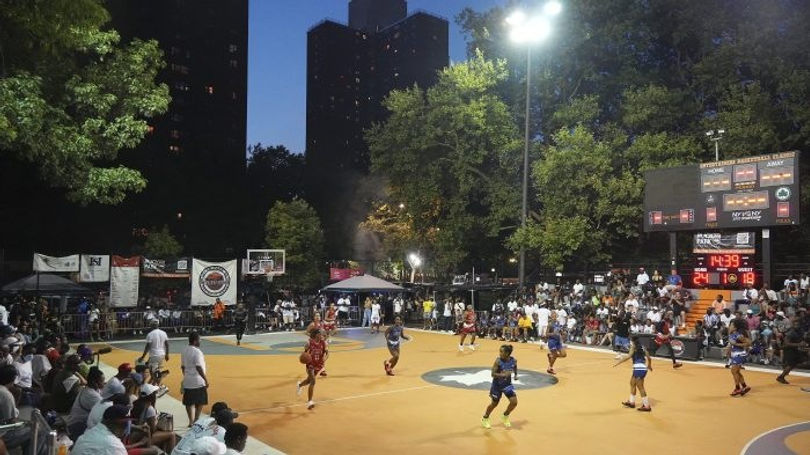
Interview With Nate Archibald
New York City Basketball History Project: Feature
By Garry D. Howard

Spanning the last century and more, across The Bronx, Manhattan, Brooklyn, Queensand Staten Island, millions of young men and women came of age in a sprawling, vibrant New York City with vivid dreams of becoming basketball legends.
Nathaniel “Tiny” Archibald had no such dreams. What he did have was, what he refers to as a “pipeline” and “mentors” who helped him navigate the educational aspect of the sport, which aided him immensely during his journey through DeWitt Clinton High School, Arizona Western, the University of Texas at El Paso, and ultimately a star-studded, 14-year career in the National Basketball Association.
When the now, still spry 78-year-old was asked to take a stroll down memory lane in an effort to illuminate the merits of the newly created New York City Basketball
History Project, (NYCBHP), he was as prolific as he was on the court when he led the NBA in scoring (34.0 ppg.) and assists (11.4 apg.) during the 1972-’73 season with
the Kansas City Kings! That incredible effort, which included a 52-point scorching of all-world New York Knicks guards Walt Frazier and Earl Monroe, was the reason
he finished third in the MVP race (behind winner Dave Cowens of the Boston Celtics and Kareem Abdul-Jabbar of the Milwaukee Bucks) that year.

Archibald, who was raised in Patterson Houses in theSouth Bronx, was a young and talented player who, by his own admission, “was lost in school.”
Tiny admits that one of the young men growing up under him, Tom Lockhart, had him confused one day.
Lockhart, a New York high school All-City player who would become a collegiate honorable mention All-American at Manhattan College in 1976, was drafted into
the NBA before opting for a celebrated European professional basketball career.
Today, he is the founding CEO and social media manager of the NYCBHP, but at that time, he had some breaking news: Lockhart was thinking of transferring from
Bronx High School of Science to DeWitt Clinton. That decision didn’t sit well with Archibald, but it resonated with Tiny, who left his home as a teenager to begin a journey that would eventually lead to his induction into the 1991 Naismith Basketball Hall of Fame.

Tiny said “When I went to college, I left my neighborhood in the South Bronx, and those who I considered my friends, guys who I grew up with, guys I was close to.
“So, when I came back to New York, I told Tom, I understand! I said that because I missed my damn friends too.
I had to make new friends, not that many, because I was a bit introverted. I didn’t socialize like a lot of other ballplayers.
“So, when I went to Arizona Western, I had a good time. But when I went to Texas El Paso, I had to make new friends. And there weren't many".
"I'll tell you what ppened,” Archibald reminisced.“When I found out that Tom wanted to transfer next door, (DeWitt Clinton and Bronx High School of Science were only separated by a football field), I was stunned.
“Let me give you the real story, because he played for me a little bit.”
“I was talking to him about education … Why would you go“Let m from Bronx High School of Science, a highly acadeic institution, to go to DeWitt Clinton?
“And you know what he told me? ‘I miss my friends.’

I grew up with people who were open and giving! We visited each other at home and would share what little food we had. We listened to music, danced to the soul music of the '60's, laughed, joked, watched the first black comedy shows on TV in each others living rooms … I missed all that out in Arizona. Hanging out it the park, shooting hoops, late at night with no friggin’ lights … I missed that. So, I understood Tom . …
I thought it was in another country,” said Tiny, laughing out loud, " And I almost was! “Because both schools I went to, Arizona Western in Yuma, Arizona, was on the border of San Luis, Mexico and then Texas El-Paso was on the border of Juarez, Mexico!
In 10 minutes you could go from the school to the bridge and there you were, in a totally different country!!! People can say what they want, but you're suddenly in another damn country hearing another language. It's a shock"!
"So, many of the friends Tom grew with went to DeWitt Clinton. Not Bronx High School of Science. Oh, he was a helluva player there, but I did not understand it then.”
“But let me say this, a lot of guys, whether they were All-City or not, leave New York and come back and never go back to school, and it’s not foreign to them … they just miss their environment, you just miss it! You don’t want to leave your comfort zone but in the end, sometimes you have to.”
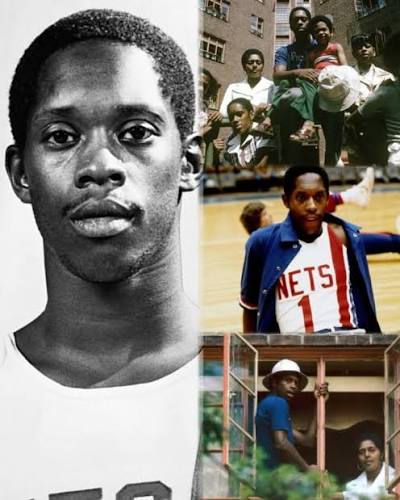
Lockhart, a 6'6" guar/forward desperately wanted to team up with his uber-talented friend Ricky Sobers at DeWitt Clinton, but although that never happened, Tom made his own survival journey into the desert in Arizona, playing for Scottsdale Junior College in Tempe, near Phoenix! The PSAL All-City selection, would lead Bronx Science to the B League City Championship, before transforming into an All-American at Manhattan College.
At this point in the discussion, however, Tiny was deep down inside his personal rabbit hole, explaining how he managed to navigate his college career and remain in
school. “I had a problem first, when I went to El Paso,” confided Archibald, “and two guys that saved me, they were still there. That was Willie Worsley from DeWitt Clinton and Willie Cager from Morris High School.
“Playing for (UTEP head coach) Don Haskins was OK, Willie was a senior and I came in as a sophomore. The team was solid because you deferred to Willie. The leader! When Willie left, the damn team fell apart because there was no leadership. It was completely different team.
“Same thing happened before that at DeWitt Clinton HS, because when Willie was a senior, I was a sophomore at Clinton. Hilton White mentored all of us. Willie played with Cager, Nevil Shed and those guys before I did. I came behind them, but it was Willie, a quiet leader who led the way!

“Tom Lockhart was not like the Lone Ranger, but in a way he was, because he came from a different environment at Bronx High School of Science and most people don’t know this, but I wasn’t the most intelligent, smart person growing up, but still, I always came back to the neighborhood and told the kids I worked with, that you had to get an education.”
Archibald, returned to school after his pro basketball career, to earn his master’s degree in education from Fordham University. He had famously become an NBA champion as the starting point guard on the 1981 Boston Celtics, the same year he won the NBA All-Star Game MVP.
He discussed what he did to rectify what he thought was not enough focus aimed at the educational component of New York City’s up-and-coming youth.
“I came back every year to the neighborhood and expressed the message of education through basketball. It helped me verbalize the stuff that was going on,” explained Archibald, a five-time All-NBA selection.
“Whether it was good or bad, I talked about it. A lot of people only talk about the good stuff, I talk about the good and the bad.
“I tell people about me almost leaving El-Paso and if it wasn’t for Nolan Richardson, I would have been back in New York. And they threatened me! They told me you ain’t
leaving! You’re not going anywhere! So, I had to stay. It wasn’t like I wanted to, but I had to stay. I was homesick, but I stayed” he asserted.

“I understand a lot of guys leaving certain situations, even though they were playing well on the court and having fun, but it’s about education,” Archibald said. “If you can
withstand that, you can do something, whether you play in the NBA or not.”
When asked what he feels would resonate with NYCBHP readership and potential sponsors, he didn’t hesitate to offer his thoughts.
“The NYC Basketball History Project has to portray not just the success stories all the time,” Archibald said. They have to try to interview guys like Fly Williams, Joe Hammond, and guys like that!
Nate also feels those who attained success in the game, need to return to offer their stories and mentorship to New York City’s youth.
“People say, I heard that this guy was a great player, he should have been playing the in the NBA, but what happened,” he said. “People need to know that. There are always
success stories, so guys can say I want to be like him, I want to be like Rod Strickland, I want to be like God Shammgod, I want to be Kenny Smith. They have to understand there’s even more guys who never made it.

“People have to understand that there is another side to the The Project.” And what would make a difference? “When we grew up, we had mentors. Mentors who could openly say to kid, ‘You playing good now … but what about your future?”
Archibald then quickly offered a list of mentors who helped him navigate his journey.
“Men like Floyd Layne, Hilton White, Myles Dorch, Ray Felix, Bill Hill and more.
I was closer to Willie Worsley because I wasn’t that far behind him in school, so I followed behind, even though Willie was a helluva student. I was not.
“I wasn’t acclimated to the school. When I first went to DeWitt Clinton, people would say, you didn’t make the team,” he said, voice rising. I got kicked off the team, not because I wan't good enough but because I wasn’t going to class!
“I didn’t know where I stood as far as basketball talent or anything like that, didn’t know if I had real talent… but, back then, if you weren’t going to class, you couldn’t play on the team.”
In addition to mentorship, Tiny believes the thousands of routes taken to basketball and educational success for New York City basketball players has to be tracked and
chronicled.

“Let me give you a pipeline,” Archibald offered. “When I was at Texas Western, it became the University of Texas-El Paso and there was a coach there, white coach, and his name was Jerry Hale. So, after a couple of years, Jerry left Texas Western and went to the College of Southern Idaho. I can name 20 guys who went there? Ricky Sobers, Victor Kelly, Arnold Duggar, Ron Behagen, all of these guys, Clinton guys.”
Archibald believes there are dozens of “pipelines” that need to be revealed in an effort to highlight those who gave back repeatedly.
“The real focus is, even when I was playing, I always came back to the neighborhood so people saw me,” said Tiny. “You can say it any way you want to but there’s a lot of guys who do well, in the Bronx, Manhattan, Brooklyn, Queens and even Staten Island, but you never see them again.
“Kids can’t touch them and when they see them as stars on TV or they read about them, and when they don’t see them, they’re lost. “I’m behind the scenes now, but I see Rod (Strickland, Truman High School, 1984 NYC and NY State champions) come into Mitchel Gym when he saw us playing with the pro guys, and he’s still in college (at DePaul University) … Today, they know he was like dynamite, no, he was like nitro, when he got into the league, but he always came back to the neighborhood.
“And after his wonderful NBA career, he went back and finished his degree and now has a great college coaching career. (Strickland is the head men’s basketball coach at
Long Island University). But the youth can see that. They can visualize him.
“For the kids its like saying, man, I remember Garry Howard shooting those jumpers.
He might not be shooting them now, but he’s doing something outstanding that the youth need know, to read about.”
Coach Strickland, raised in Mitchel Houses in the South Bronx, was a two-time All-American at Depaul University before being drafted in the first round by his hometown New York Knicks. After the 1997-’98 season, Strickland was named a second-team All-NBA selection and led the league in total assists and assists per game (10.5 apg.) en route to a standout, 17-year NBA career.
Strickland declared that Archibald returning time and again to the neighborhood,
was a blessing! “Just the inspiration of seeing a pro like Nate was enormously motivating! ” said Coach Strickland.

“Nate Archibald set the stage,” he continued. “To see him have his own little rim in the gym, to me in my eyes, that meant he was special, and obviously him being a pro, but seeing that little rim, there was a perfection in that thought that I’m going to make the rim smaller and make it harder score! Normal, regulation rims would seem huge for a shooter!
“So, that gave me kind of a blueprint. And when you got a chance to watch him workout, you saw he was about his business!
“For me, him being around, being reachable and being a pro was special,” said Strickland. “I wish I would have gotten more out of Tiny, and this might not even be for this story, but I wish I had got more out of Tiny because I realize as time goes on, me and Tiny had some similarities. Tiny wasn’t the talker and I realized as I got older, I was kind of like that, too.
“(Tiny) was there with the Boston Shootout and coaching, so he was giving back to us in a natural way and again, as a pro, he didn’t have to do that, but he was from the
neighborhood, of the neighborhood and he stayed in the neighborhood and that was an enormous influence on us as well because I wound up doing the same thing during and after my NBA career. Staying close and around our neighborhood.”

The New York City Basketball History Project, which is growing by leaps and bounds according to its documented metrics, has attracted a strong audience this year and that fact is not lost to Archibald.
“I read it a lot and I think it’s great,” Tiny confessed. “There are some things that, I don’t know where that information is coming from, but there’s some things I read about, I say to myself, ‘I didn’t know about that!’ ”
“Still, I think there should be a strong emphasis on the mentors who helped players get accepted into some of these powerhouse schools. “Those stories can be told as well.”
As they should.
------------------------------------------------------------------------------------------------

Garry D. Howard, raised in Mitchel Houses in the South Bronx, is a trailblazing American sports journalist, editor, and media executive. He broke significant racial barriers in the sports media landscape by becoming the first African American president of the Associated Press Sports Editors (APSE) from 2009 to 2010. He currently serves as the Director of Corporate Initiatives at American City Business Journals. Winner of the Loeb Minard Editor Award in 2021, he has been inducted into the ASPE Red Smith Hall of Fame, the Milwaukee Press Club Hall of Fame, the National Association of Black Journalists Hall of Fame and, most recently, the Black Sportswriters


This is my uncle! Thank you for this 🥹🫶🏽
Thanks for the wonderful comments.
Thank you for this! Been waiting for someone to hilite all Nate Archibald has meant to NYC bball, and make the connection between he and my other ‘fave NBA player’-both via Mott Haven The Bronx-Rod Strickland! Been followin Tiny since 1st seein him in 1972 and will always cherish him leadin our Boston C’s to ‘81 title. Thx again. 63yo Bostonian.
Thank you for shining a light on a great player. I grew up in Patterson Projects and Taft High School watching him play. Even the first blackout, he shot jump shots by the moonlight. A Bronx legend!
I first saw Tiny play in the NYC championship game in the small home court gym of my High School, Erasmus Hall, in Brooklyn. We were the defending champions and Tiny was not Clinton’s star player (Mike Switzer was their star). But the game ended with this small skinny kid dribbling the clock out with nobody on the Erasmus team able to stop him. At the time I was in disbelief that we couldn’t steal the ball from this unknown pipsqueek. It was only years later that II realized we had lost to a legend, one of the greatest point guards in the history of the NBA. I enjoyed reading this story and learning that Tiny has succeeded in lif…